
Structure-Based Design and Computational Evaluation of Amentoflavone Derivatives as Novel CXCR4 Antagonists
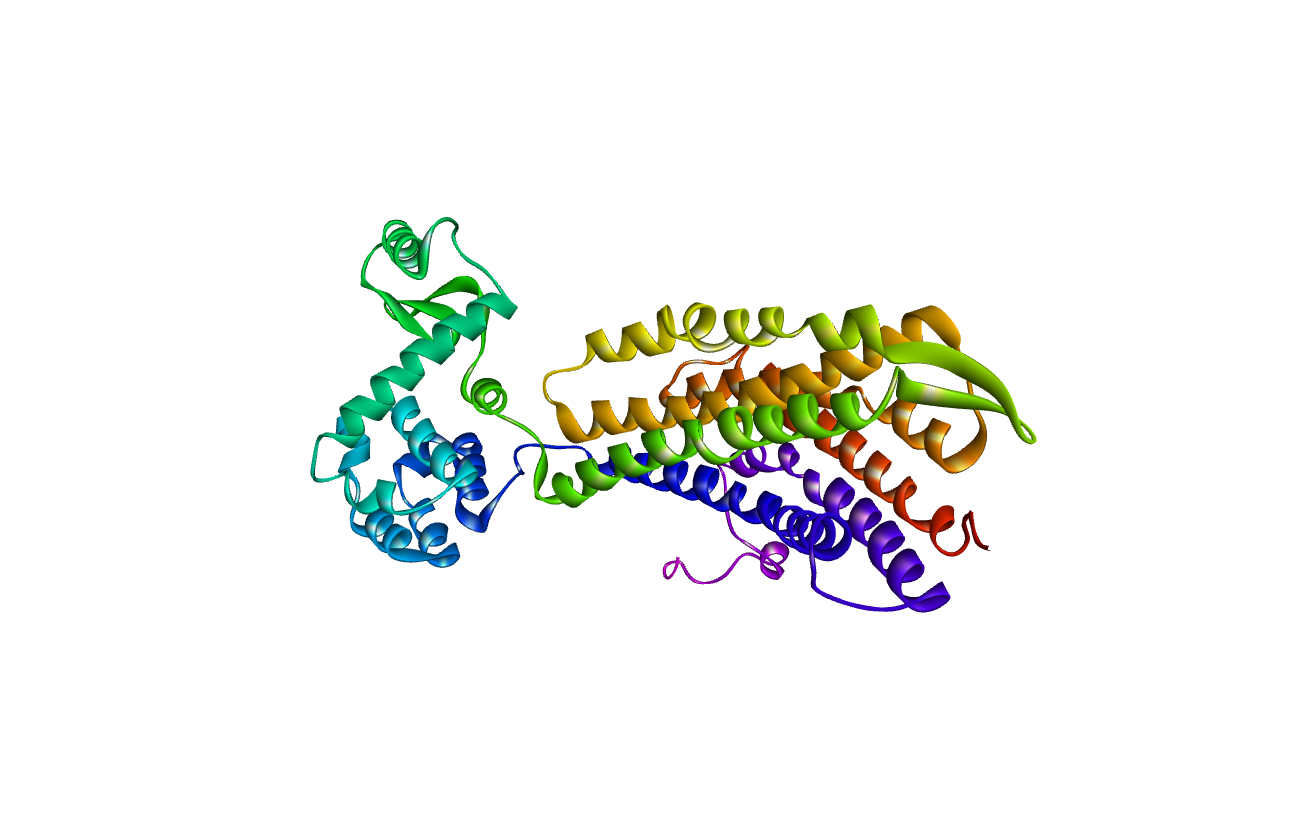
Project Overview: The C-X-C chemokine receptor type 4 (CXCR4) is an oncological target overexpressed in over 20 cancer types, driving metastatic dissemination and therapy resistance via its interaction with CXCL12. Plerixafor (AMD3100) represents the only FDA-approved CXCR4 antagonist, but its clinical utility in oncology is limited by poor oral bioavailability and cardiovascular safety concerns. This study employed a structure-based drug design workflow against the human CXCR4 crystal structure (PDB ID: 3ODU) to rationally design five novel derivatives of the natural biflavonoid Amentoflavone, evaluating their predicted binding affinities, binding modes, ADME properties, and in silico toxicity endpoints relative to the parent natural compound and Plerixafor.
Research Questions & Hypotheses
The study addressed three central research questions formulated from current GPCR structure-based drug discovery literature:
- Scaffold Optimization: Can rational structural modification of the natural Amentoflavone scaffold—through selective deoxygenation and targeted amination—improve predicted binding affinity for CXCR4 relative to both the unmodified parent compound and the clinical reference antagonist Plerixafor?
- Pocket Complementarity: Do the designed derivatives establish specific, directional hydrogen bonding and aromatic interactions with critical pharmacophore residues within the CXCR4 orthosteric binding cavity?
- Drug-Likeness: Do the optimized derivatives exhibit in silico ADME and toxicity profiles consistent with early-stage natural product-derived lead candidates?
Working Hypothesis: Selective removal of excessive hydroxyl groups reduces non-specific polar interactions and steric hindrance, freeing the planar biflavonoid core to engage key receptor residues (including Asn43, Tyr55, and Trp104) with improved predicted shape complementarity and lower polar surface area.
Computational Approach & Methodology
A multi-step structure-based drug design (SBDD) and chemoinformatics workflow was applied:
Receptor Preparation
Retrieved the human CXCR4 crystal structure from the RCSB PDB (PDB ID: 3ODU, resolved at 2.50 Å with antagonist IT1t). Crystallographic water molecules, co-crystallized small-molecule antagonists, and non-protein heteroatoms were removed. Added polar hydrogens and assigned Kollman united-atom partial charges using AutoDock Tools.
Derivative Design
Constructed 2D chemical structures of five novel Amentoflavone derivatives using MolSoft ICM-Chemist. Generated 3D coordinates and performed energy minimization using the NCI Online SMILES Translator. Gasteiger partial charges and rotatable bonds were assigned with AutoDock Tools.
Molecular Docking
Simulations performed via AutoDock Vina (v1.1.2) centered on the orthosteric binding site (grid box: x=19.78, y=−6.85, z=68.11, size: 52 × 52 × 52 ų). Exhaustiveness parameter was set to 32 for thorough conformational sampling.
Interaction & Safety Profiling
Characterized 2D/3D ligand–receptor interactions with BIOVIA Discovery Studio Visualizer. Evaluated physicochemical drug-likeness (Lipinski Rule of Five) and ADME via SwissADME. Evaluated oral toxicity class (LD50), organ toxicity, and mutagenicity/carcinogenicity via ProTox-II.
| Derivative Name | Structural Modification | Design Rationale |
|---|---|---|
| Deoxy-Amentoflavone | Selective deoxygenation only; no added functional group | Isolates the contribution of deoxygenation; reduces non-specific H-bonding |
| Fluoro-Deoxy-Amentoflavone | Selective deoxygenation + F at para position of one terminal phenyl ring | Replaces NH₂ with bioisosteric fluorine to test binding without amine-associated toxicity |
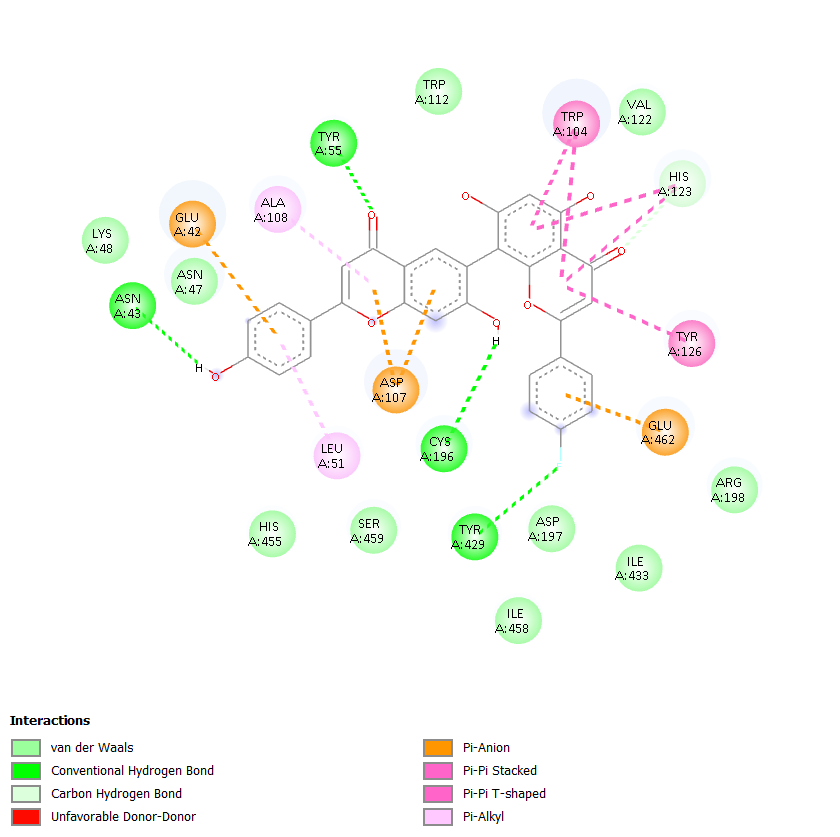
| Deoxy-Amino-Amentoflavone | Selective deoxygenation + NH₂ at para position of terminal phenyl ring | Introduces directed electrostatic contact with Asn43 and Tyr55 |
| MethylAmino-Deoxy-Amentoflavone | Selective deoxygenation + NHCH₃ at para position of terminal phenyl ring | Evaluates effect of N-methylation on binding geometry and lipophilicity |
| Di-Amino-Amentoflavone | Selective deoxygenation + NH₂ at para positions of both terminal phenyl rings | Tests whether dual amination provides additive binding benefits |
Computational Tools & Data
Key Findings & Binding Affinities
All five designed derivatives showed more favorable predicted binding scores against CXCR4 than both natural Amentoflavone (−11.1 kcal/mol) and Plerixafor (−9.4 kcal/mol) under the applied docking protocol.
| Compound | Affinity (kcal/mol) | MW (g/mol) | TPSA (Ų) | Lipinski Viol. | Bioavail. | Tox. Class | Predicted Mutagenicity |
|---|---|---|---|---|---|---|---|
| Fluoro-Deoxy-Amentoflavone | −11.9 | 524.45 | 141.34 | 1 | 0.55 | Class 5 (2500 mg/kg) | Inactive |
| Deoxy-Amentoflavone | −11.9 | 490.46 | 121.11 | 0 (Fully compliant) | 0.55 | Class 5 (2430 mg/kg) | Inactive |
| Deoxy-Amino-Amentoflavone | −11.8 | 521.47 | 167.36 | 1 | 0.55 | Class 3 (159 mg/kg) | Active |
| MethylAmino-Deoxy-Amentoflavone | −11.8 | 535.50 | 153.37 | 1 | 0.55 | Class 3 (159 mg/kg) | Active |
| Di-Amino-Amentoflavone | −11.5 | 520.49 | 173.15 | 1 | 0.55 | Class 3 (159 mg/kg) | Active (Carcinogenic) |
| Natural Amentoflavone (Parent) | −11.1 | 538.46 | 181.80 | 2 | 0.17 | Class 5 (3919 mg/kg) | Inactive |
| Plerixafor (Clinical Reference) | −9.4 | 502.78 | 78.66 | 2 | 0.17 | Class 4 (550 mg/kg) | Inactive |
1. Primary Driver: Deoxygenation & Tyr55 Engagement
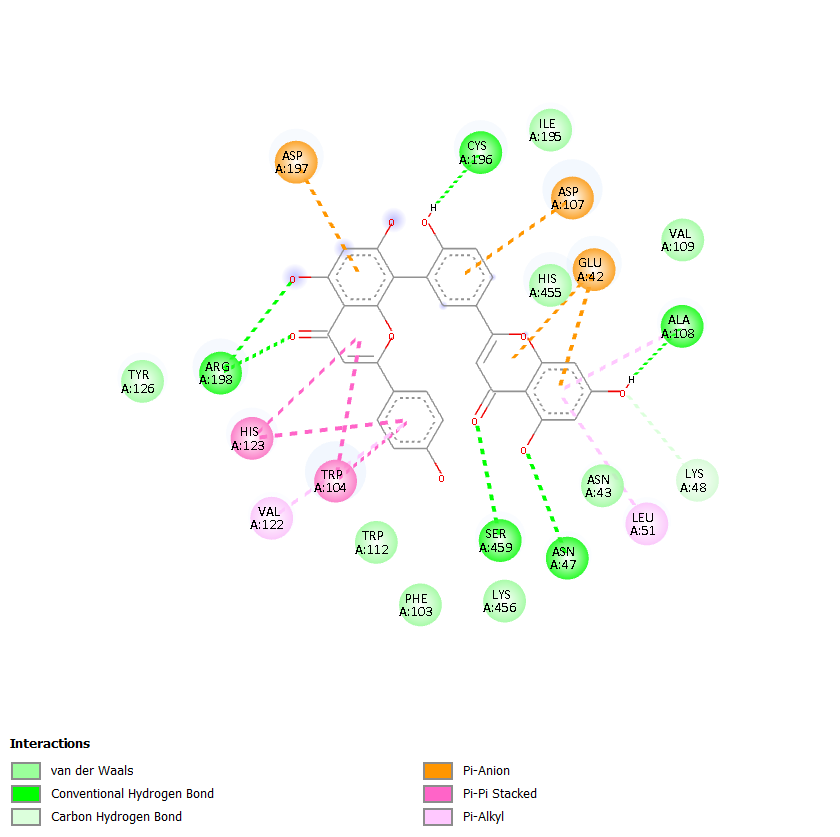
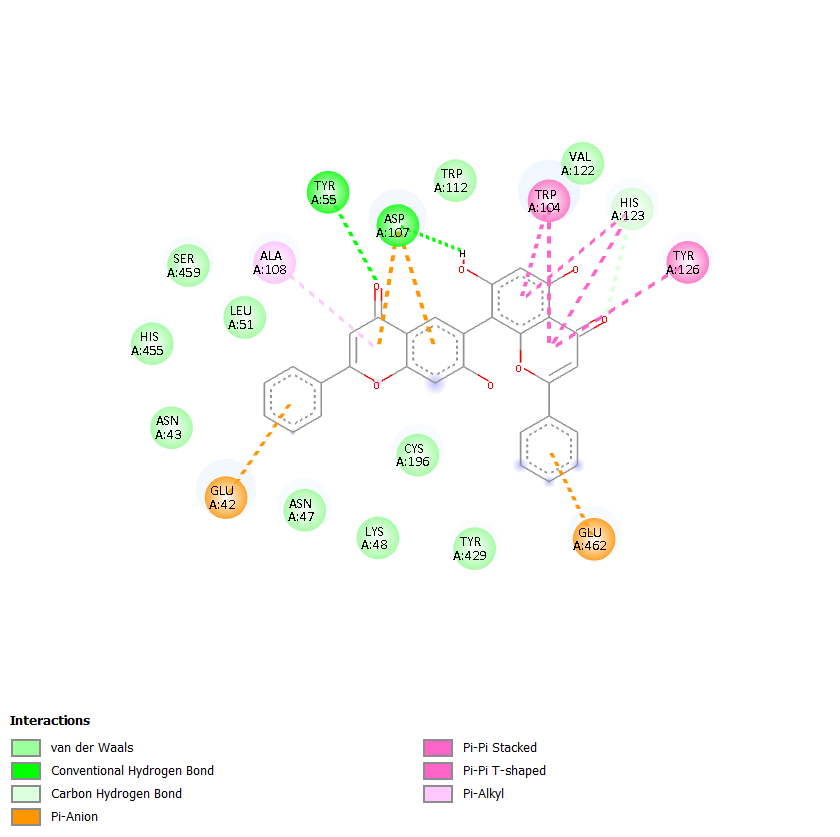
Deoxygenation was associated with the largest improvement in predicted binding affinity across the series. While natural Amentoflavone established hydrogen bonds with Cys196, Asn43, and Ser459, it failed to engage Tyr55. Selective deoxygenation allowed Deoxy-Amentoflavone to adopt a complementary orientation within the orthosteric pocket, establishing a directional conventional hydrogen bond with Tyr55 alongside Asp107 and persistent π–π stacking with Trp104.
2. Fluoro-Deoxy-Amentoflavone as the Most Balanced Candidate
Fluoro-Deoxy-Amentoflavone achieved the joint highest predicted binding score (−11.9 kcal/mol) while maintaining a favorable predicted safety profile: Toxicity Class 5 (LD50: 2500 mg/kg), inactive mutagenicity and carcinogenicity, and no predicted CYP2C19 inhibition. The bioisosteric fluorine atom mediated hydrogen bonding interactions with Tyr55, Asn43, Cys196, and Tyr429 without introducing the mutagenic liability observed in amine-containing derivatives.
3. The Over-Substitution Penalty in Di-Amino-Amentoflavone
Di-Amino-Amentoflavone demonstrated the lowest predicted docking score (−11.5 kcal/mol) among the designed compounds. Interaction analysis identified an unfavorable donor–donor electrostatic clash between the second amino group and Asn43, demonstrating that excessive polar substitution within this cavity introduces steric and electrostatic penalties.
Visual Results & Molecular Interaction Maps

Limitations & Scientific Interpretation
All findings presented in this thesis represent computational predictions derived from static molecular docking and in silico machine-learning models. They must not be construed as experimentally validated biological efficacy or clinical safety.
- Static Approximation: Molecular docking simulations provide a static thermodynamic approximation of binding free energies and do not account for full receptor conformational flexibility, solvent entropy, or membrane dynamics.
- Machine-Learning Model Bounds: ADME and toxicity predictions from SwissADME and ProTox-II are generated by statistical algorithms trained on existing chemical libraries; novel scaffolds may lie near the boundaries of their applicability domains.
- Derivative Library Size: The evaluated library was restricted to five systematically designed derivatives, serving as an initial exploration of the chemical space rather than a comprehensive combinatorial screening.
- Single Crystallographic Conformation: The 3ODU crystal structure captures one static antagonist-bound state; GPCRs in cell membranes sample dynamic ensembles that require future molecular dynamics or ensemble docking.
Key References
- Banerjee, P. et al. (2018). ProTox-II: A webserver for the prediction of toxicity of chemicals. Nucleic Acids Research, 46(W1), W257–W263. doi:10.1093/nar/gky318 ↗
- Burger, J. A., & Kipps, T. J. (2006). CXCR4: A key receptor in the crosstalk between tumor cells and their microenvironment. Blood, 107(5), 1761–1767. doi:10.1182/blood-2005-08-3182 ↗
- Daina, A., Michielin, O., & Zoete, V. (2017). SwissADME: A free web tool to evaluate pharmacokinetics and drug-likeness. Scientific Reports, 7, 42717. doi:10.1038/srep42717 ↗
- Lipinski, C. A. et al. (2001). Experimental and computational approaches to estimate solubility and permeability. Advanced Drug Delivery Reviews, 46(1), 3–26. doi:10.1016/s0169-409x(00)00129-0 ↗
- Trott, O., & Olson, A. J. (2010). AutoDock Vina: Improving the speed and accuracy of docking. Journal of Computational Chemistry, 31(2), 455–461. doi:10.1002/jcc.21334 ↗
- Wu, B. et al. (2010). Structures of the CXCR4 chemokine receptor in complex with small molecule and cyclic peptide antagonists. Science, 330(6007), 1066–1071. doi:10.1126/science.1194396 ↗
- Xiong, X. et al. (2021). Insights Into Amentoflavone: A Natural Multifunctional Biflavonoid. Frontiers in Pharmacology, 12, 768708. doi:10.3389/fphar.2021.768708 ↗