Research and softwareUğur Cem Yıldız
I work in molecular biology, use computational methods and develop software.
I gained laboratory experience at LMU Klinikum and completed two undergraduate theses on CXCR4. I am looking for research opportunities in the life sciences while developing my own software projects.
- LMU research internship
- Two CXCR4 undergraduate theses
- CareerOS prototype
Selected work
Both of my theses focused on CXCR4. One examined how molecules might bind to the receptor; the other looked at expression and survival associations in cancer datasets.
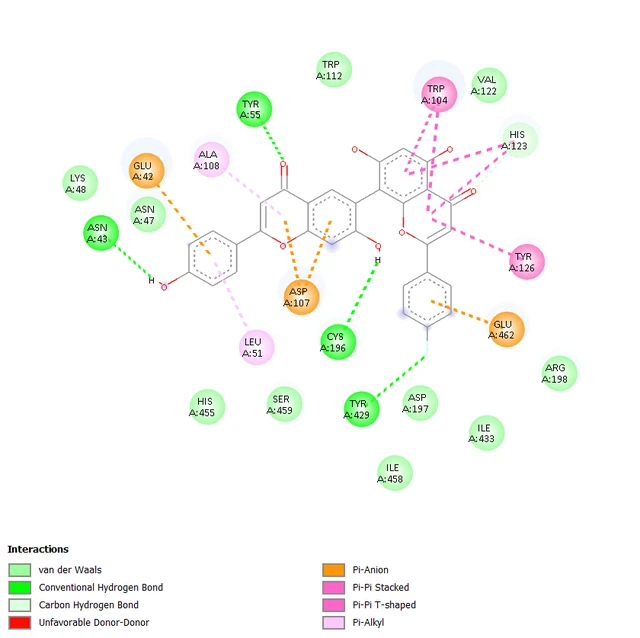
Undergraduate thesis · Computational drug designHow can amentoflavone derivatives be prioritised for experimental evaluation?
- My contribution
- I designed five derivatives and compared docking, ADME and toxicity predictions.
- Key finding
- Fluoro-Deoxy and Deoxy shared a docking score of −11.9 kcal/mol. I prioritised Fluoro-Deoxy for further evaluation.
Computational prediction, requiring experimental evaluation.
Explore the study → 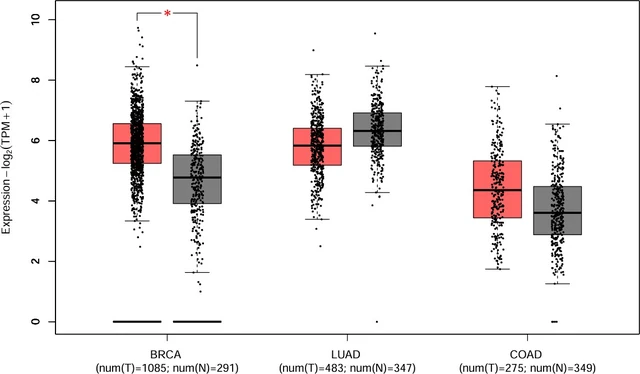
Undergraduate thesis · Cancer bioinformaticsDoes the association between CXCR4 expression and survival differ across tissues?
- My contribution
- I examined expression, genomic alterations, survival and immune infiltration in public cancer datasets.
- Key finding
- Higher CXCR4 expression was associated with longer survival in LUAD (p = 0.007). Associations in BRCA and READ were not significant.
Observational associations; they do not establish causality.
Explore the study → 
Software · Personal prototypeI built CareerOS while looking for work in life sciences. It is a personal prototype for reviewing roles and preparing applications. I share the source code and a local demo with fictional data.
Python · Streamlit · Local demo
Research experience at LMU
During my internship, I worked on protein and RNA assays and gene-expression data.
From July to September 2025, I completed an Erasmus+ research internship at LMU Klinikum, IPEK. I worked on protein and RNA analyses in an experimental model with shRNA-mediated CXCR4 knockdown.
- Protein
- Protein extraction, BCA assays and Western blotting.
- RNA
- RNA isolation, cDNA synthesis and qPCR.
- Imaging and data
- Immunofluorescence staining; gene-expression analysis, including NGS datasets.
About me and education
I study Molecular Biology and Genetics at İnönü University and Computer Programming at Anadolu University. I combine laboratory skills with computational methods and software.
Molecular Biology and Genetics · BSc
İnönü University
Sep 2021 – 2027 (expected) · GPA 3.33 / 4.00
Computer Programming · Associate degree
Anadolu University
2025 – 2027 (expected) · GPA 3.26 / 4.00
Certifications: Bioinformatics Data Analysis: Python, Linux & R (Super.AI) · Cancer Biology 101 (Udemy) · Evolution Theory 101 (Evrim Ağacı)
Turkish (native) · English (B2) · Istanbul, Türkiye
Methods and tools I use
Methods I have used in the laboratory and in my research, alongside the programming tools I am still learning.
LMU Klinikum · Erasmus+ internshipApplied in the laboratory
Protein extraction, BCA, Western blotting, RNA isolation, cDNA synthesis, qPCR and immunofluorescence.
Explore the experience →Other laboratory techniques
DNA/RNA isolation, PCR, agarose gel electrophoresis, spectrophotometry and standard curves, haemocytometer cell counting, media preparation and mitochondrial isolation.
Used in my research
AutoDock Vina and AutoDock Tools; Discovery Studio, SwissADME and ProTox-II. GEPIA2, cBioPortal, Kaplan–Meier Plotter, TIMER2.0 and STRING.
Explore the research →Methods covered
Molecular docking and ADME/toxicity prediction; expression, survival and immune-infiltration analysis in public datasets. Structure files with OpenBabel.
Programming and data
Python and R; Linux fundamentals for bioinformatics data analysis. I am learning Java at a basic level.
Explore my education →My software approach
I work with AI-assisted coding tools. Reviewing and testing their outputs is part of my learning process.